Is Fruit Juice Really a Healthy Drink for Kids?
Fruit juice has a healthy reputation. It’s made from fruit, and often labelled as 100% juice. Many of us also grew up with having orange juice at breakfast to start the day!
But when it comes to children, especially in childcare settings, juice may not quite be the “fruit equivalent” we might think it is.
Let’s take a closer look at the different types of juice and explore what’s in them and how beneficial (or not), it can be.
Why Do Children Like Juice?
Children are naturally drawn to sweet flavours - it is part of human biology to enjoy sweet foods as it signals energy. Juice is sweet, easy to drink, often brightly coloured, and sometimes marketed with fun packaging or characters that children love. Because it is so easy to drink, children can drink a lot before they feel full. This is what makes moderation important.

Sugar Content (Whole Fruit vs. Juice)
It is easy to think that since fruit juice comes from the fruit itself, that they are similar. However, in the process of converting the fruit into juice, they have some differences in their nutrition value.
 Whole fruit contains |  Fruit juice contains |
Fibre | Little to no fibre |
Vitamins and minerals | Vitamins (some may be lost during processing) |
Natural sugars | Natural sugars and sometimes added sugars |
Water |
One of the key differences here is fibre. Fibre slows down how quickly sugar enters the bloodstream. It also helps children to feel full and supports healthy digestion. This results in a drink that delivers sugar quickly in the body.
Fruit juice is considered a concentrated source of sugar. A small 200mL juice box often contains 20-25 grams of sugar – this equates to roughly 5-6 teaspoons of sugar. Even when it says “no added sugar” on the packaging, natural sugars may still be present in high amounts.
How Many Fruits Does it Take for One Glass of Juice?
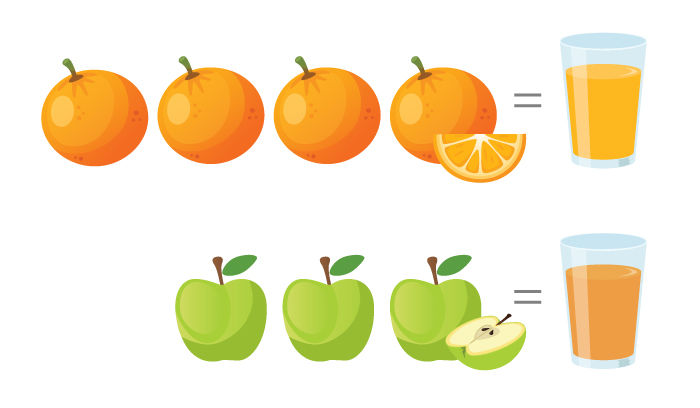
Orange Juice - It usually takes about 3-4 oranges to make one standard glass (250mL) of orange juice. If you think about it, most children would not sit down and eat 4 oranges in one go. They’d likely feel full long before that (or bored). But, drinking the juice from those oranges is easy.
Apple Juice - For apples, it takes about 2-3 medium apples to make 250mL’s of juice, and again, it is unlikely that children will sit to finish 2-3 apples in one sitting, which may be a challenge even for an adult!
The Juice Aisle
Walking down the juice aisle presents you with a multitude of options to choose from – cartons, bottles, juice boxes of various flavours; orange, apple, tropical, berry, mango etc.
But which of these options are actually beneficial?
100% Fruit Juice
When a product says “100% fruit juice”, it means that the juice is made entirely from fruit, with no added sugar. However, this does not mean that it is low in sugar. For example, although a Just Juice 200mL apple juice box (says “99% fruit juice” on the packaging) does not contain any added sugar, it still contains 20.2g of sugar. This is very similar to sugar content levels you would find in soft drinks.
Juice From Concentrate
Many juices available at shops are made from concentrates. This means that the fruit is juiced, then water is removed to make a concentrated syrup. The concentrate is then shipped and later reconstituted with water. This process makes juice easier and cheaper to transport. Nutritionally, these juices are similar in sugar content to freshly squeezed juice. The key difference is processing and flavour.
Fruit Drinks
Some drinks in the juice aisle aren’t really juice at all. They might only contain 25-50% of fruit juice. The rest of the drink is made of a combination of water, added sugar, sweeteners, and flavourings. For example, a Golden Circle Tropical Punch Fruit Drink contains 25% reconstituted fruit juice.
Why This Matters in Childcare
With so many brands, flavours, and types of juices available, there is something they all have in common. They are usually concentrated sources of sugar with very little fibre.
This is why according to childcare menu planning guidelines, the recommendation is to not offer juice. It is considered a discretionary drink, and seen as a drink which leaves a sticky residue on teeth that allows bacteria in the mouth to produce acids that can contribute to tooth decay.
So What Drinks Can Childcare Offer Instead?
Instead of juices, the recommendations for childcare is to offer water at all meals and for it to be available freely throughout the day.
The other drink option is full-fat milk, especially for children under 2 years of age. Reduced-fat milk is suitable for children over 2 years old. Milk provides calcium and protein that supports growing bodies.
These options provide hydration and important nutrients without the concentrated sugars found in juice.
What Age Should Children Have Juice?
For children <12 months, the recommendation is to completely avoid fruit juice. For older children, it should still be limited. Even if it is offered, it should be in small amounts, and served with meals (ideally after a meal), rather than sipped throughout the day.
Ideas for Childcare Centres
Make Water Fun
Adding slices of fruit to water jugs can improve the flavour profile of water without the concentrated sugar component.
Celebrate Whole Fruit
Teach the children to eat their fruit, instead of drinking it. You can include whole fruit in meals - added to yoghurt, oats, or smoothies (blend the whole fruit instead of juicing it).
Watch the ‘Health Halo’
Be mindful of what is marketed on packaging, even though a product presents itself as healthy with pictures of fresh fruit. It is important to review the ingredient list and nutrition label.
Lead by Example
Children model the behaviours of those around them and also adults. Lead by example by also having good drinking habits that we want them to model.
Need More Support?
If your childcare centre would like more assistance with menu planning, childcare guidelines, or staff training and education, reach out to an OSCAR Care Group Accredited Practising Dietitian for support tailored to your centre.
We are more than happy to support you in creating a healthy environment that helps children form healthy habits.


