3 Ways to Improve Independence at the Dining Table
More than a Meal
Meals should be an enjoyable part of the day, not a chore or a timed activity. Whether it’s lamingtons or roast lamb on the plate, every meal is an opportunity to support independence and spark some joy!
What comes to mind first when you think about mealtimes? Is it just nutrition? Or do you think of enjoyment, comfort, socialization, or memories? Meals are about more than what’s on the plate, and it’s important that’s taken into consideration in an aged care environment.
Everyone starts their life depending on others for feeding. As people grow older, this can become the case once again. Hands may start to shake. Vision may blur a little. Energy may fade more quickly. The mind may not be as sharp as it once was. Needing a helping hand around mealtimes becomes a part of life for many aged care residents, and that’s ok. What matters most is how support is provided.
Needing help eating can feel very personal. Mealtimes are a big part of everyday life, and losing dependence in this area can affect confidence, mood and self-esteem. When people are supported to do what they can for themselves, they keep a sense of control and identity. This can improve appetite, wellbeing and overall quality of life.
Here are three ways to support independence at the dining table.
1# Set the Table for Success

A good meal starts before the first bite
Imagine trying to eat a meal without your glasses, your chair is too far from the table, the people talking to you keep whispering, and…oh no…your teeth are missing! It doesn’t sound like much fun, let alone easy. Before putting food on the table, it’s important to prepare a resident for their meal.
A few simple checks can make all the difference:
Is the resident sitting upright and comfortably?
Can they easily reach their plate, drink or cutlery? OR are they positioned in a way that you can comfortably sit beside them to provide aid?
Do they have their glasses, dentures, hearing aids, etc.?
Does the meal look and smell appealing?
These details can make the difference between a person feeling frustrated and overwhelmed or confidently enjoying their meal.
2# Assist, Don’t Just Feed

How to provide Support without taking over
It can be tempting to go ahead and do everything for someone, especially if time is tight. But being helpful doesn’t mean taking over, and everyone’s needs are different.
Many residents only need a little bit of support, this might include cutting meals up, placing cutlery in their hands, offering a sip of water as needed, or giving gentle reminders and encouragement throughout their meal. These small actions help residents stay in control.
Now some residents may need more physical support, but there are still ways to keep them engaged in the process. Hand-over-hand assistance is a great example of this. It’s where the resident holds the cutlery with their supporter, and it allows them to stay a part of the process, instead of just being fed.
There’s also assistive cutlery and drinkware available which can be easier to hold and use than traditional tableware. When used correctly, these support independence and can reduce the need for physical assistance.
The goal stays the same, to help residents do as much as they can for themselves, in a manner that feels respectful and comfortable for everyone involved.
3# Make Meals Social
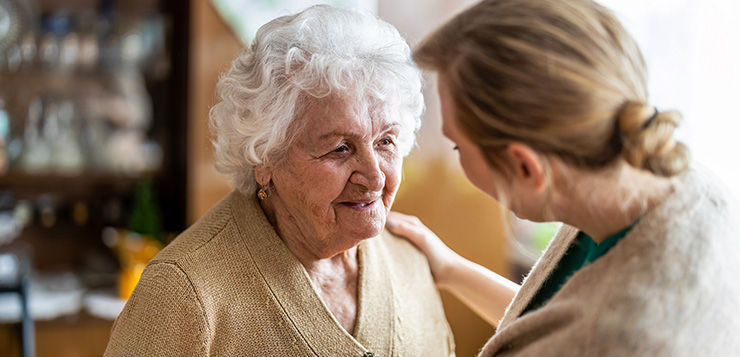
Food is better with connection
Meals are about much more than what’s on the plate. Saying hello, using a person’s name, making eye contact and starting up a conversation transforms eating into enjoying. It also helps residents to feel relaxed and valued as a person, instead of a box to be ticked.
Here are some ideas for conversation:
Describe the meal! For bonus points, add some descriptors in too.
“Hi [name], today you’ve got a juicy pulled pork with mash potato, carrots and broccoli. It smells great!”
Texture modified foods can be harder to recognise visually, so it’s especially important to provide this description. Try reading the menu before serving.
Ask what the resident thinks of the food.
Does it taste good?
Have you eaten this before?
When providing physical assistance, ask before you do.
Would you like a sip of water now? Do you want some more of the pork?
All finished? Are you ready for dessert now?
If the resident is non-verbal or has difficulty answering questions, pay attention to body language such as smiles, nods, head shakes, etc.
It’s also beneficial to describe before you do to help keep them engaged; “You seem to be finished with the pork. I’ll put some dessert on the spoon now for you to try, it’s pannacotta”.
Allow conversation to flow naturally. While it’s important to talk about the food itself, you can always share memories, talk about their day, the music they were listening to this morning, etc.
While it’s not necessary to talk for every second of the meal (nothing would get eaten then!), having a simple conversation will help build a sense of connection.
It also helps to slow things down. Sitting at eye level, letting the person set the pace and avoiding rushing creates a calmer, more supportive environment.
When people feel relaxed, they’re more likely to eat well and enjoy the experience.
Want to Delve Deeper?
We Can Help! Supporting independence at mealtimes requires more than just kindness, it requires knowledge and practical skills. Our mealtime assistance training explores this topic in depth.
We cover in depth how to recognise changing mealtime needs, how to support residents without taking over, and how to maintain good nutrition while protecting dignity and choice. Reach out to an OSCAR Care Group Dietitian to organise staff education today!


